High-Intensity Focused Ultrasound (HIFU) has emerged as a revolutionary, non-invasive solution for skin lifting and rejuvenation. Understanding what physiological principles guide HIFU treatment use is essential for anyone considering this advanced therapy. In Dubai, clinics like Dynamic Clinic provide access to HIFU treatment in Dubai, combining scientific precision with aesthetic expertise to enhance skin texture and firmness.
HIFU works by targeting specific layers of the skin, including the superficial muscular aponeurotic system (SMAS), which plays a critical role in facial structure and tone. This mechanism ensures that the treatment not only tightens skin but also stimulates natural collagen production.
How HIFU Uses Focused Ultrasound Energy
The core physiological principle behind HIFU is its ability to deliver concentrated ultrasound energy to precise depths beneath the skin without damaging the surface. Key points include:
Thermal coagulation: Ultrasound waves generate heat in targeted tissues, typically reaching temperatures of 60–70°C, which triggers controlled tissue injury.
Collagen remodeling: The thermal effect stimulates fibroblasts to produce new collagen, improving skin elasticity and firmness over time.
Selective targeting: Different ultrasound depths can be adjusted to treat superficial dermis, deep dermis, and the SMAS layer, allowing for customizable treatment plans.
This selective energy delivery is crucial for achieving lifting and tightening without invasive surgery, making HIFU a preferred choice for patients seeking natural results.
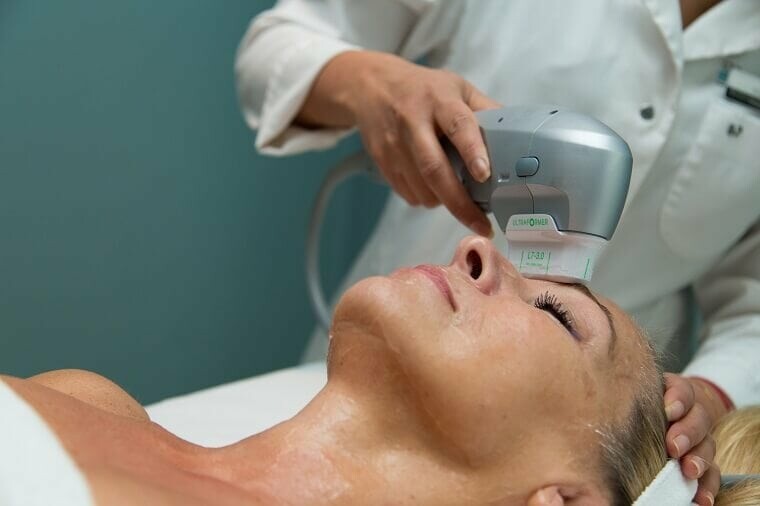
Role of Tissue Response in HIFU Efficacy
HIFU’s effectiveness relies on the physiological response of tissues to focused energy. Understanding these responses is vital for clinicians and patients:
Inflammatory response: The minor controlled damage induces a natural healing process, recruiting immune cells and growth factors.
Fibroblast activation: Fibroblasts are responsible for producing collagen and elastin, which restore skin resilience.
Tissue contraction: Heat-induced collagen denaturation causes immediate contraction, providing subtle lifting effects right after treatment.
This combination of immediate and delayed tissue response ensures both short-term and long-term improvements in skin tone and firmness.
Precision and Depth: Understanding Ultrasound Penetration
HIFU’s unique advantage lies in its ability to penetrate multiple tissue layers safely. Physiological principles guiding this aspect include:
Acoustic impedance: Different tissues absorb ultrasound differently, requiring careful calibration to target the SMAS without harming surrounding structures.
Focal point control: Energy converges at specific points below the skin, ensuring localized effects while preserving the epidermis.
Layer-specific remodeling: By adjusting depth and energy settings, clinicians can achieve tailored outcomes for sagging cheeks, jawlines, or brows.
This precision underscores why HIFU is considered a non-invasive yet effective alternative to traditional surgical facelifts.
Neuromuscular and Vascular Considerations
Beyond collagen stimulation, HIFU also influences other physiological structures:
Nerve sparing: Proper ultrasound focus avoids major nerve pathways, preventing discomfort or functional issues.
Vascular response: Small blood vessels can constrict slightly due to thermal exposure, promoting mild tightening without compromising circulation.
Muscle tension effect: Targeting the SMAS can improve underlying muscular support, enhancing contour and natural lift.
These physiological effects contribute to the overall aesthetic outcome while maintaining safety.
Patient Selection and Biological Factors
Understanding HIFU physiology also involves recognizing patient-specific variables:
Skin thickness and density: Denser dermal layers may respond differently to ultrasound energy.
Age-related collagen levels: Older patients may require more sessions due to reduced baseline collagen.
Healing capacity: Individual variations in tissue repair influence the extent and speed of results.
Proper assessment ensures optimal targeting, energy settings, and realistic expectations for each patient.
Conclusion
HIFU treatment leverages fundamental physiological principles—thermal energy, collagen remodeling, tissue contraction, and neuromuscular safety—to deliver non-invasive skin lifting and rejuvenation. Clinics offering HIFU treatment in Dubai, like Dynamic Clinic, combine these scientific insights with advanced technology to provide natural-looking results. By understanding the underlying biology, patients can appreciate how HIFU stimulates long-term improvements in skin tone, firmness, and overall facial structure.